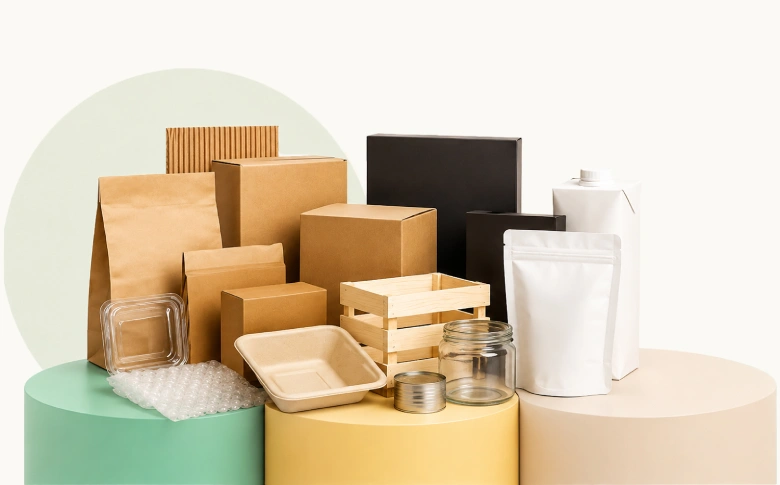
I’m Tahir, and I’ve worked in the packaging industry for the past seven years. In this guide, I’ll walk you through everything you need to know about packaging, including its types, materials, uses, benefits, and sustainable practices.
By the end of this article, you’ll have a clear understanding of how packaging works, why it matters, and how to choose the right packaging solution for any product.
What is Packaging?
When we search for the word packaging, the most basic definition that we get is:
“Packaging is the science, art, and technology of enclosing or protecting products for distribution, storage, sale, and use.”
However, packaging is far more than just that. Packaging is a vessel that protects your product while presenting it in an eye-catching way that attracts customers.
Philip Kotler, widely recognized as the Father of Modern Marketing, defines packaging as “all the activities of designing and producing the container or wrapper for a product.”
He considers packaging an integral part of the product within the marketing mix because it does more than protect what’s inside. Effective packaging communicates a brand’s identity, differentiates products on the shelf, provides essential information, and influences consumers’ purchasing decisions by creating a strong first impression.
Why Does Packaging Matter?
Packaging plays an important role in making your product noticeable on crowded shelves. It is the sole reason that attracts customers to your product.
There are various reasons why packaging matters:
- Protects products from damage, moisture, dust, contamination, and tampering during storage and transportation.
- Attracts customers by creating a strong first impression and encouraging purchase decisions.
- Builds brand identity through consistent colors, logos, typography, and design.
- Communicates essential information such as ingredients, usage instructions, warnings, and regulatory details.
- Extends shelf life by preserving freshness and protecting products from environmental factors.
- Improves customer experience with convenient, functional, and memorable packaging.
- Supports marketing efforts by acting as a silent salesperson at the point of purchase.
- Encourages sustainability through recyclable, reusable, and eco-friendly packaging materials.
- Simplifies storage and transportation by making products easier to stack, ship, and handle.
- Ensures regulatory compliance by meeting industry and government packaging standards.
Types of Packaging
There are 3 main types of packaging that help protect and hold your product. Here are the 3 types of packaging you must know:
- Primary Packaging
- Secondary Packaging
- Tertiary Packaging
Primary Packaging

Primary packaging refers to the packaging that interacts with your product directly. It is a vessel that actually contains the consumable products. The main purpose of this packaging is to protect the product and ensure it is safe for consumers to use.
Here are some examples of primary packaging:
- Water bottle
- Chocolate wrapper
- Medicine blister pack
- Shampoo bottle
- Cereal inner bag
Secondary Packaging
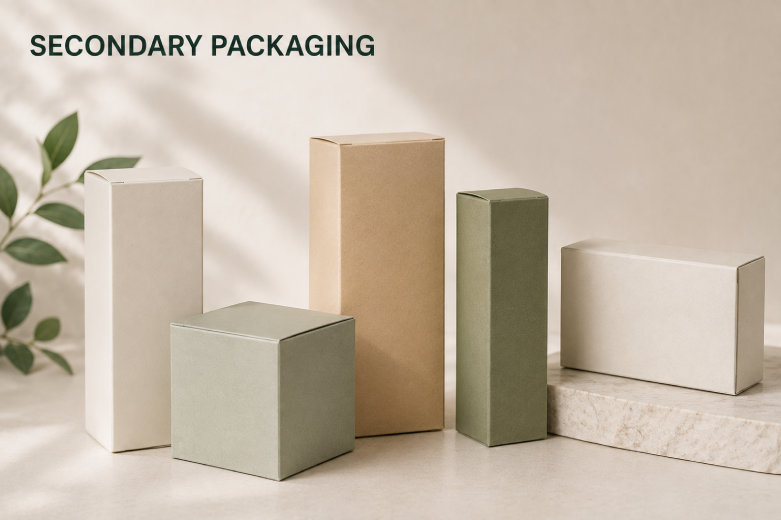
Secondary packaging refers to the container that holds the product and the primary packaging. The main purpose of this packaging is to provide additional protection, making products easier to display, and often serves branding purposes.
Here are some examples of secondary packaging:
- A cereal box that holds the cereal inner bag
- A carton containing six toothpaste boxes
- A gift box containing a perfume bottle
- A six-pack beverage carrier
Please note: For some products, secondary packaging can be the primary packaging, especially products like earbuds, mobile phones, and other electronic products.
Tertiary Packaging
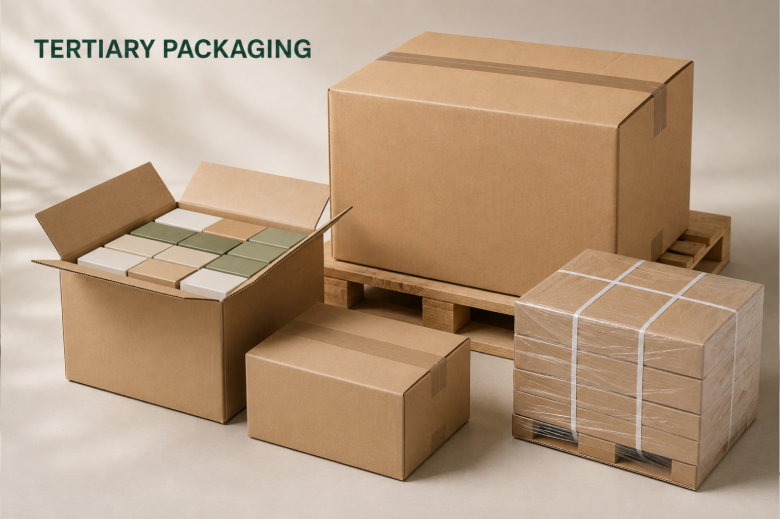
Tertiary packaging is designed for shipping, storage, and bulk transportation. Consumers usually don’t see it because it is removed before products reach store shelves.
Here are some examples of tertiary packaging:
- Corrugated shipping boxes
- Wooden pallets
- Stretch wrap around palletized goods
- Shipping crates
| Packaging Type | Definition / Direct Interaction | Main Purpose | Key Examples |
| Primary Packaging | Interacts with the product directly; the actual vessel containing the consumable. | Protects the product and ensures it is safe for consumer use. | Water bottle, chocolate wrapper, medicine blister pack, shampoo bottle, cereal inner bag. |
| Secondary Packaging | The container that holds both the product and its primary packaging. | Provides additional protection, makes products easier to display, and serves branding purposes. | Cereal box (holding the inner bag), carton of six toothpaste boxes, gift box for a perfume bottle, six-pack beverage carrier. |
| Tertiary Packaging | Bulk packaging used for transport and storage; typically not seen by consumers. | Designed for shipping, storage, and bulk transportation. | Corrugated shipping boxes, wooden pallets, stretch wrap around palletized goods, shipping crates. |
Now that you know about types of packaging, let’s talk about the types of packaging materials.
Types of Packaging Materials
There is a huge range of packaging materials that various brands use for their products; however, I’m going to cover the ones that are the most popular in the packaging industry.
| Material Type | Key Characteristics | Main Benefits / Purpose | Common Examples |
| Cardboard | Lightweight, affordable, easy to print on, and recyclable. | A popular, practical choice for retail packaging. | Cosmetic boxes, pharmaceutical boxes, cereal boxes, toy packaging, bakery boxes, soap boxes. |
| Corrugated Cardboard | Features a fluted layer between two linerboards. | Gives excellent strength and cushioning; designed to protect products during shipping, storage, and handling. | Shipping boxes, mailer boxes, e-commerce packaging, electronics packaging, furniture boxes, moving boxes. |
| Paperboard | Thinner and smoother than corrugated cardboard; provides an excellent printing surface. | Commonly used for lightweight consumer packaging. | Medicine cartons, frozen food boxes, cereal boxes, cosmetic packaging, sleeve packaging, folding cartons. |
| Kraft Paper | Features a natural brown appearance and strong fibers; eco-friendly, recyclable, and biodegradable. | A preferred choice for brands focusing on sustainable packaging. | Shopping bags, takeaway food boxes, coffee bags, wrapping paper, gift bags, kraft mailer boxes. |
| Rigid Board | Thick, highly durable, and premium quality. | Offers excellent protection while creating a high-end, luxury unboxing experience. | Luxury gift boxes, jewelry boxes, perfume boxes, mobile phone boxes, watch boxes, premium cosmetic packaging. |
| Plastic | Lightweight, moisture-resistant, and highly versatile (available as bottles, jars, trays, pouches, and films). | Protects products from moisture; many manufacturers now use recyclable or recycled plastics to reduce eco-impact. | Water bottles, food containers, shampoo bottles, snack packaging, yogurt cups, stand-up pouches. |
| Glass | Non-reactive material that provides a premium look and feel. | Preserves product quality; safe for food, beverages, cosmetics, and pharmaceuticals. | Juice bottles, perfume bottles, skincare jars, sauce bottles, jam jars, medicine bottles. |
| Metal | Usually made of aluminum or steel; durable and highly recyclable. | Offers outstanding strength and protects products from moisture, light, and oxygen. | Soft drink cans, food cans, aerosol cans, paint cans, coffee tins, pet food containers. |
Here are the types of packaging materials:
Cardboard
Cardboard is one of the most widely used packaging materials. It is lightweight, affordable, and easy to print on, making it a popular choice for retail packaging. It is also recyclable, making it a practical option for many businesses.
Here are some of the common examples:
- Cosmetic boxes
- Pharmaceutical boxes
- Cereal boxes
- Toy packaging
- Bakery boxes
- Soap boxes
Corrugated Cardboard
Corrugated cardboard has a fluted layer between two linerboards, giving it excellent strength and cushioning. It is designed to protect products during shipping, storage, and handling.
Here are some of the common examples:
- Shipping boxes
- Mailer boxes
- E-commerce packaging
- Electronics packaging
- Furniture boxes
- Moving boxes
Paperboard
Paperboard is thinner and smoother than corrugated cardboard. It provides an excellent printing surface and is commonly used for lightweight consumer packaging.
Here are some of the common examples:
- Medicine cartons
- Frozen food boxes
- Cereal boxes
- Cosmetic packaging
- Sleeve packaging
- Folding cartons
Kraft Paper
Kraft paper is known for its natural brown appearance and strong fibers. It is an eco-friendly material that is recyclable and biodegradable, making it a preferred choice for sustainable packaging.
Here are some of the common examples:
- Shopping bags
- Takeaway food boxes
- Coffee bags
- Wrapping paper
- Gift bags
- Kraft mailer boxes
Rigid Board
Rigid board is a thick and durable packaging material used for premium and luxury products. It offers excellent protection while creating a high-end unboxing experience.
Here are some of the common examples:
- Luxury gift boxes
- Jewelry boxes
- Perfume boxes
- Mobile phone boxes
- Watch boxes
- Premium cosmetic packaging
Plastic
Plastic packaging is lightweight, moisture-resistant, and highly versatile. It is available in different forms, including bottles, jars, trays, pouches, and films. Many manufacturers now use recyclable or recycled plastics to reduce environmental impact.
Here are some of the common examples:
- Water bottles
- Food containers
- Shampoo bottles
- Snack packaging
- Yogurt cups
- Stand-up pouches
Glass
Glass packaging provides a premium appearance and preserves product quality. It is non-reactive, making it suitable for food, beverages, cosmetics, and pharmaceuticals.
Here are some of the common examples:
- Juice bottles
- Perfume bottles
- Skincare jars
- Sauce bottles
- Jam jars
- Medicine bottles
Metal
Metal packaging offers outstanding strength and protects products from moisture, light, and oxygen. Aluminum and steel are the most commonly used metals because they are durable and highly recyclable.
Here are some of the common examples:
- Soft drink cans
- Food cans
- Aerosol cans
- Paint cans
- Coffee tins
- Pet food containers
Common Packaging Styles
Packaging is available in many different styles, and each one is designed for a specific purpose. Some styles focus on protecting products during shipping, while others are created to improve product presentation and enhance the customer experience. Choosing the right packaging style depends on your product, industry, budget, and branding goals.
Some of the most common packaging styles include:
- Mailer Boxes
- Folding Cartons
- Corrugated Boxes
- Rigid Boxes
- Tuck Boxes
- Sleeve Packaging
- Display Boxes
- Gable Boxes
- Pillow Boxes
- Two-Piece Boxes
- Magnetic Closure Boxes
- Window Boxes
- Die-Cut Boxes
- Shipping Boxes
- Stand-Up Pouches
Packaging Printing Methods
Printing transforms plain packaging into a powerful branding tool. It allows businesses to display logos, product information, instructions, and attractive graphics that capture customers’ attention. The printing method you choose depends on your packaging material, order quantity, budget, and print quality requirements.
The most common packaging printing methods include:
- Offset Printing
- Digital Printing
- Flexographic Printing
- Gravure Printing
- Screen Printing
- UV Printing
Packaging Finishes
Packaging finishes improve both the appearance and durability of packaging. They add texture, protect printed designs, and help products create a lasting first impression. Premium finishes can also make your packaging feel more luxurious and increase its perceived value.
Popular packaging finishes include:
- Matte Lamination
- Gloss Lamination
- Soft-Touch Lamination
- Spot UV
- Foil Stamping
- Embossing
- Debossing
- Aqueous Coating
- Varnish
- Holographic Finish
Sustainable Packaging
Sustainability has become one of the biggest priorities in the packaging industry. Businesses and consumers are increasingly choosing packaging that reduces waste and minimizes environmental impact. Sustainable packaging focuses on using recyclable, reusable, biodegradable, or compostable materials without compromising product protection.
Common sustainable packaging materials include:
- Recyclable Cardboard
- Kraft Paper
- Corrugated Cardboard
- Molded Pulp
- Recycled Paper
- Glass
- Aluminum
- Compostable Packaging Materials
FDA, FSC, and Food-Safe Packaging Standards
Packaging should not only look good but also meet industry standards and regulations. Certifications and compliance standards help ensure that packaging is safe, responsibly sourced, and suitable for its intended use. They also build trust with customers and support regulatory compliance.
Some of the most important packaging standards include:
- FDA Compliance: Ensures food-contact packaging materials are safe for consumers.
- FSC Certification: Confirms that paper-based packaging comes from responsibly managed forests.
- Food-Safe Packaging: Uses materials and inks that are safe for direct or indirect food contact.
- Recyclability Standards: Help businesses produce packaging that can be recycled after use.
- ISO Standards: Promote quality management and consistent manufacturing practices.
Packaging Trends for 2026
The packaging industry continues to evolve as brands focus on sustainability, innovation, and better customer experiences. New technologies and changing consumer expectations are shaping how products are packaged and delivered around the world.
Some of the biggest packaging trends in 2026 include:
- Sustainable Packaging
- Smart Packaging with QR Codes and NFC
- Minimalist Packaging Design
- Mono-Material Packaging
- Refillable and Reusable Packaging
- Lightweight Packaging
- Digital Printing
- Personalized Packaging
- E-commerce Ready Packaging
- AI-Assisted Packaging Design
Final Thoughts
Packaging is much more than a container that holds a product. It protects products, strengthens brand identity, improves customer experience, and influences purchasing decisions. From choosing the right material and packaging style to selecting suitable printing methods and sustainable solutions, every decision affects how your product performs in the market.
Whether you are launching a new product, managing an established brand, or simply learning about the packaging industry, understanding these fundamentals will help you make informed decisions. As packaging continues to evolve with new technologies and sustainability initiatives, staying informed will help your products remain competitive and meet changing customer expectations.
Frequently Asked Questions
1. What is packaging?
Packaging is the process of designing and producing containers or wrappers to protect, store, transport, and present products. It also helps businesses build their brand and attract customers.
2. What are the three main types of packaging?
The three main types of packaging are primary packaging, secondary packaging, and tertiary packaging. Each type serves a different purpose, from protecting the product to simplifying storage and transportation.
3. What are the most common packaging materials?
The most common packaging materials include cardboard, corrugated cardboard, paperboard, kraft paper, rigid board, plastic, glass, and metal. Each material offers unique benefits depending on the product and industry.
4. Why is packaging important?
Packaging protects products from damage, extends shelf life, improves brand recognition, provides essential product information, and encourages customers to make a purchase.
5. What is sustainable packaging?
Sustainable packaging uses recyclable, reusable, biodegradable, or compostable materials to reduce environmental impact while maintaining product protection and functionality.
6. What is the difference between cardboard and corrugated cardboard?
Cardboard is a single-layer paper-based material used for lightweight packaging. Corrugated cardboard contains a fluted middle layer between two linerboards, making it stronger and better suited for shipping and heavy products.
7. Which packaging material is best for shipping?
Corrugated cardboard is considered the best packaging material for shipping because it offers excellent strength, cushioning, and durability during transportation.
8. What are the most common packaging printing methods?
Offset printing, digital printing, flexographic printing, gravure printing, screen printing, and UV printing are the most commonly used methods for printing custom packaging.
9. What are packaging finishes?
Packaging finishes are decorative and protective coatings applied after printing. Popular finishes include matte lamination, gloss lamination, soft-touch lamination, spot UV, foil stamping, embossing, and debossing.
10. What certifications are important for packaging?
Some of the most important packaging certifications include FSC Certification for responsibly sourced paper products and FDA compliance for food-contact packaging materials. These standards help ensure safety, quality, and environmental responsibility.