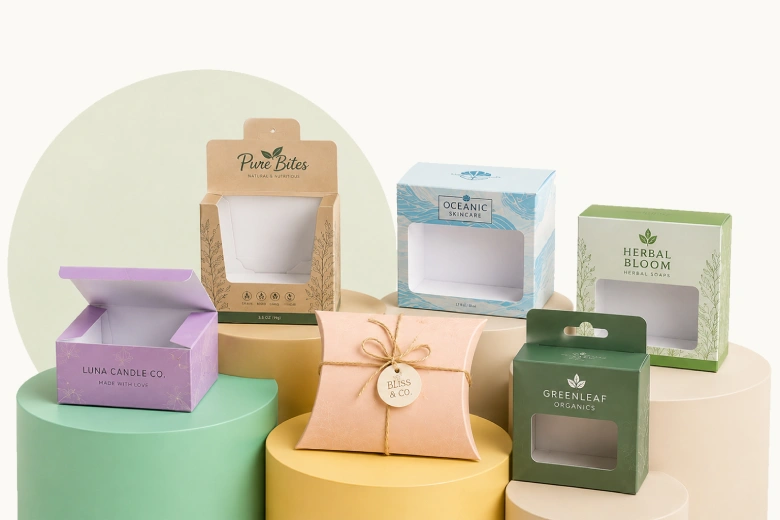
In this guide, I will walk you through the key features, types, and why brands use secondary packaging.
Key Features of Secondary Packaging
Secondary packaging is one of the main types of packaging that comes with various key features, and some of them are mentioned below:
- Branding & Marketing: Secondary packaging lets you print logos, graphics, custom artwork, and product information.
- Product Protection: It shields the primary packaging or product from damage during shipping and handling.
- Convenience in Distribution: It helps retailers to organize and distribute bulk items effectively.
Types of Secondary Packaging
Secondary packaging is available in many forms, and the right choice depends on the product, industry, shipping method, and branding needs. Below are some common types businesses use. It also improves product organization.
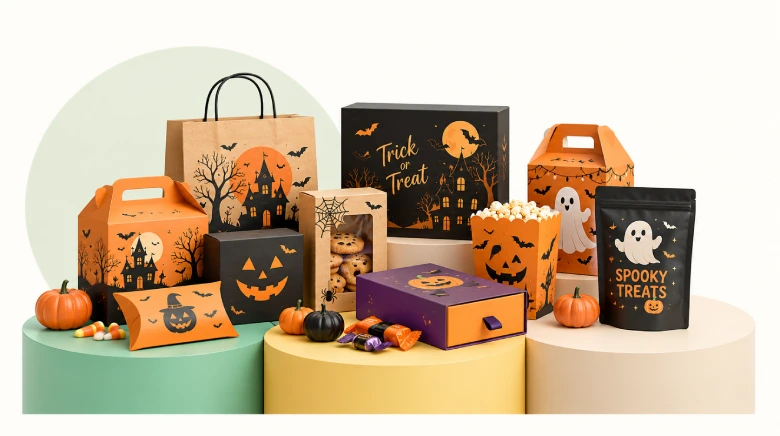
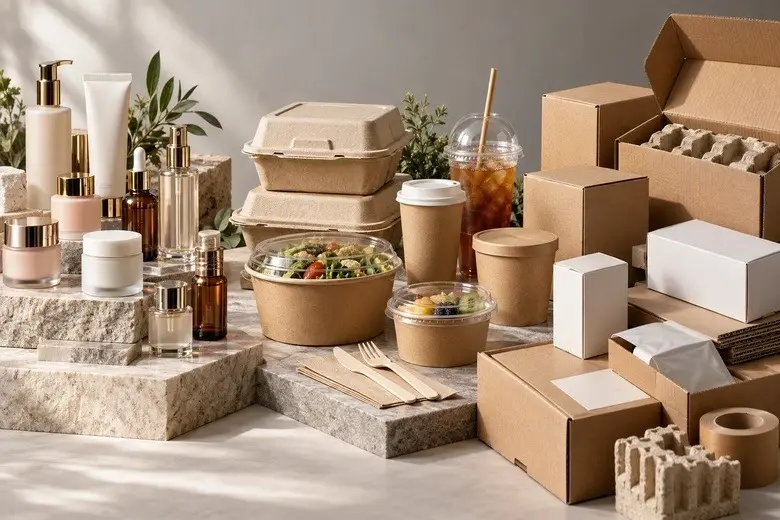
- Folding Cartons: Folding cartons are lightweight paperboard boxes commonly used for cosmetics, food, medicines, electronics, and personal care products. They are easy to print, customize, store, and assemble. Brands use them to display product details, instructions, ingredients, and promotional messages.
- Corrugated Boxes: Corrugated boxes are widely used for shipping and e-commerce packaging. They contain fluted paperboard layers that provide strength and cushioning. These boxes protect products from pressure, impact, dust, and movement during transportation.
- Display Boxes: Display boxes protect products while presenting them attractively in retail stores. They are often placed on counters, shelves, and checkout areas. Their open structure improves product visibility and can encourage quick purchase decisions.
- Shrink Wrap: Shrink wrap is a plastic film that tightly covers a group of products when heat is applied. It is commonly used for bottled drinks, canned food, personal care items, and promotional bundles. It keeps products together and helps protect them from dust, moisture, and tampering.
- Trays and Sleeves: Packaging trays hold products securely, while sleeves slide over the tray or primary package. This style is popular for food, cosmetics, gifts, electronics, and subscription products. It creates a premium appearance and offers a convenient opening experience.
Why Do Brands Use Secondary Packaging?
Brands use secondary packaging for more than basic protection. It supports logistics, product presentation, customer communication, and marketing.
- Reduced Product Damage: Products may pass through warehouses, delivery vehicles, distribution centers, and stores before reaching customers. Secondary packaging adds another protective layer and reduces the risk of scratches, dents, breakage, leakage, and contamination.
- Better Shipping Efficiency: Well-designed packaging lets you stack, pack, and transport products efficiently. Boxes with consistent dimensions make better use of pallets, shelves, and shipping containers. This reduces wasted space and helps control transportation costs.
- Improved Inventory Management: Secondary packages often include barcodes, stock-keeping units, batch numbers, and product labels. These details help workers identify, count, scan, and track goods. Clear labeling can also reduce picking mistakes and make restocking easier.
- Enhanced Retail Presentation: Well-designed packaging improves how products look on store shelves. Attractive colors, readable typography, quality printing, and consistent branding help products stand out. Secondary packaging can also organize small items into a neat display.
- More Space for Information: Primary packaging may not provide enough room for every required detail. Secondary packaging gives brands space for instructions, warnings, ingredients, usage directions, certifications, QR codes, and contact information. This helps customers make informed buying decisions.
- Sustainability Benefits: Secondary packaging can support environmental goals when it uses recyclable, reusable, or responsibly sourced materials. Brands can reduce waste by selecting the correct package size and removing unnecessary layers. Lightweight packaging may also lower shipping weight.
How to Choose the Right Secondary Packaging
Choosing the right packaging requires careful planning. It should protect the product, support operations, communicate the brand message, and remain affordable.
Start by considering the product’s size, shape, weight, and fragility. Heavy or delicate items may require corrugated boxes, inserts, dividers, or stronger materials. Lightweight retail products may only need folding cartons, sleeves, or display boxes.
Consider how the product will be stored and transported. Packaging for local retail distribution may have different requirements than packaging for long-distance shipping or e-commerce. It should handle stacking, vibration, pressure, and repeated movement.
Material selection is equally important. Paperboard and corrugated cardboard are popular because they are lightweight, printable, and widely recyclable. Plastic films may be useful when moisture resistance or bundling is required. Reusable crates may suit closed distribution systems.
Brands should also consider customer experience. Packaging should be easy to open, carry, store, and recycle. Excessive tape, oversized boxes, and complicated opening methods can frustrate customers.
Primary vs Secondary Packaging
Primary packaging comes into direct contact with the product. Examples include bottles, jars, cans, tubes, pouches, and wrappers. Its main purpose is to contain, preserve, and protect the individual product.
Secondary packaging surrounds the primary package or groups several primary packages together. Examples include cartons, display boxes, corrugated cases, and shrink-wrapped bundles. It provides added protection, improves handling, and creates space for branding.
Both packaging levels work together. Primary packaging protects the product itself, while secondary packaging supports transportation, storage, presentation, and bulk handling.
Conclusion
Secondary packaging plays an important role in product protection, transportation, storage, retail display, and brand communication. It helps businesses reduce damage, organize inventory, improve shipping efficiency, and present products professionally.
The best solution depends on the product, distribution process, customer expectations, and budget. By selecting the right materials, size, structure, and design, brands can create packaging that is practical, attractive, and effective throughout the supply chain.