
What is Primary Packaging?
Primary packaging is the first layer of packaging that directly contains or touches the product. It protects the product from contamination, moisture, air, light, leakage, and physical damage. It also helps preserve product quality, maintain freshness, and make the product easier for customers to use.
Common examples of primary packaging include bottles, jars, cans, pouches, tubes, sachets, blister packs, wrappers, and trays. The right packaging type depends on the product’s size, form, sensitivity, storage requirements, and intended use.
For a full understanding of primary packaging, read our latest guide on primary packaging.
Now that you know what primary packaging is, let’s discuss the types of primary packaging:
Primary Packaging Types
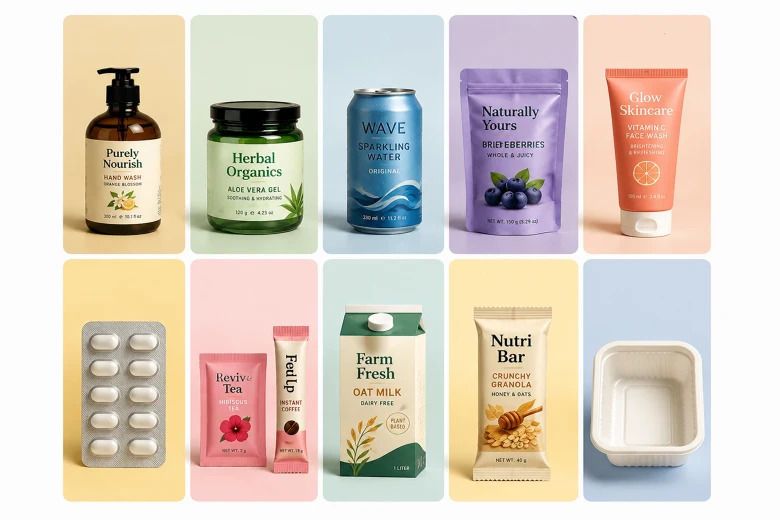
Below are some of the most common types of primary packaging used across different industries.
Bottles
Bottles are widely used for liquids, powders, tablets, and personal care products. They can be made from plastic, glass, or metal. Beverage companies use bottles for water, juice, milk, and soft drinks, while cosmetic and healthcare brands use them for shampoos, lotions, medicines, and supplements.
Bottles may include screw caps, pumps, droppers, spray nozzles, or tamper-evident seals. These closures make the packaging easy to use while protecting the contents from leakage, contamination, and air exposure.
Jars
Jars are commonly used for food, cosmetics, medicines, and household products. They usually have a wide opening, making it easy for customers to scoop, pour, or remove the product. Glass jars are popular for sauces, jams, pickles, creams, and candles, while plastic jars are often used for powders, supplements, scrubs, and hair products.
Jars provide good product visibility and can be reused or recycled depending on the material. Their rigid structure also protects the contents from crushing and impact.
Cans
Cans are durable containers made from aluminum or steel. They are frequently used for beverages, food, paints, sprays, and industrial products. Metal cans offer strong protection against light, air, moisture, and physical damage.
Food and beverage cans can extend shelf life because they are tightly sealed. Aerosol cans use pressure to dispense deodorants, air fresheners, cooking sprays, and cleaning products.
Pouches
Pouches are flexible packages made from plastic films, foil, paper, or a combination of materials. They are used for snacks, coffee, sauces, pet food, powders, frozen products, and personal care items.
Pouches are lightweight and require less storage space than many rigid containers. They may include resealable zippers, spouts, tear notches, or clear windows. Stand-up pouches are especially popular because they remain upright on shelves and provide space for branding and product information.
Tubes
Tubes are commonly used for creams, gels, pastes, and semi-liquid products. Toothpaste, hand cream, ointments, cosmetics, adhesives, and food pastes are often packed in tubes.
They can be made from plastic, aluminum, or laminated materials. Tubes allow customers to dispense a controlled amount of product while limiting exposure to air and contamination. Their lightweight design also makes them convenient for travel.
Blister Packs
Blister packs consist of a molded plastic cavity sealed to a backing material such as foil, paperboard, or plastic. They are widely used for tablets, capsules, batteries, and toys.
This packaging keeps each item separate and protected. In pharmaceutical applications, blister packs can help customers track doses and identify whether a tablet has been taken. They also provide tamper evidence and reduce direct product contact.
Sachets and Stick Packs
Sachets and stick packs are small, single-use packages designed to hold a measured amount of product. They are commonly used for sauces, shampoo, creams, spices, and samples. Stick packs are often used for drink powders, sugar, coffee, supplements, and medicines.
These formats are lightweight, affordable, and easy to distribute. They are useful for travel, promotional samples, and products that require accurate portion control.
Cartons
Some folding cartons are considered primary packaging when they directly contain a product without an inner package. Examples include cartons for dry food, frozen products, tea, detergent, and certain pharmaceutical items.
Paperboard cartons are lightweight, printable, and easy to customize. They provide space for branding, instructions, ingredients, and nutritional information. Some include coatings or liners that protect products from moisture, grease, or air.
Wrappers
Wrappers cover individual products such as candy bars, soap, biscuits, bakery items, and disposable goods. They may be made from paper, plastic film, foil, or laminated materials.
Wrappers protect products from dust, moisture, handling, and contamination. They also provide a printable surface for logos, product names, ingredients, and promotional designs.
Trays
Trays hold products in a fixed position and are often sealed with film or covered with a lid. They are widely used for fresh meat, fruit, vegetables, ready meals, bakery products, and medical items.
Plastic, foam, aluminum, and paperboard trays provide support and help prevent product movement. Sealed trays can also preserve freshness and reduce leakage.
Conclusion
Primary packaging is available in many forms, including bottles, jars, cans, pouches, tubes, blister packs, sachets, cartons, wrappers, and trays. Each type offers different benefits related to protection, convenience, preservation, visibility, and branding.
The right choice depends on the product’s form, sensitivity, shelf life, storage conditions, and intended use. By selecting suitable primary packaging, brands can protect product quality, improve customer experience, and present their products effectively.