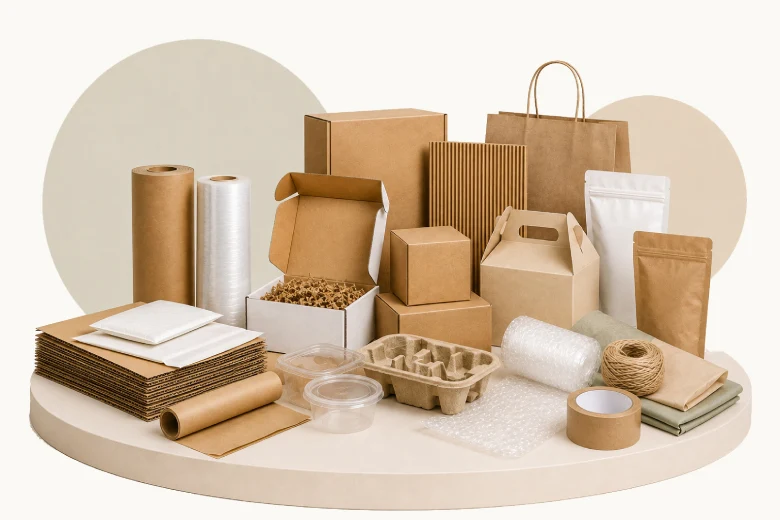
This guide explains primary, secondary, tertiary, and ancillary packaging materials, including traditional and emerging options, so you can compare their strengths, limitations, and ideal applications before choosing the most suitable solution for your products and supply chain with confidence.
Why Packaging Matters
Effective packaging protects products from contamination, impact, moisture, light, oxygen, and other hazards throughout their lifecycle. It can reduce damage, waste, returns, and transportation costs while making storage and handling more efficient.
Packaging also carries instructions, ingredients, warnings, barcodes, and regulatory information. At retail or during delivery, its structure and appearance influence recognition, trust, convenience, and perceived value. Choosing materials carefully therefore supports product quality, customer satisfaction, operational performance, brand positioning, and environmental goals rather than treating packaging as a purely decorative or last-minute decision.
If you want to learn more about packaging, read our latest packaging guide for a better understanding.
Packaging Materials Types
Packaging materials are grouped by the role they play in the packaging system. There are different types of packaging, and each type is made from unique materials. Primary packaging makes direct contact, secondary packaging groups or presents units, tertiary packaging supports distribution, and ancillary materials add protection, closure, cushioning, or labeling throughout the packaging system.
Primary Packaging Materials
Primary packaging directly contains or touches the product, making material safety, compatibility, preservation, usability, and presentation especially important to consumers.
Glass
Glass provides an impermeable, chemically stable barrier that helps preserve flavor, aroma, and product quality. It suits beverages, foods, cosmetics, and pharmaceuticals, while offering a premium appearance and broad recyclability. However, glass is heavy, breakable, and often more expensive to transport than lighter alternatives.
Metal
Metal packaging, including aluminum and steel, offers excellent protection against light, oxygen, moisture, and physical damage. Cans, tins, tubes, and aerosol containers provide long shelf life and strong recyclability. Key considerations include material cost, possible denting, internal coatings, and the energy required for manufacturing.
Paper and Card
Paper and card are used for wraps, sachets, cartons, sleeves, and direct-contact food formats when suitable barriers are added. They are lightweight, printable, and widely recyclable when clean and uncoated. Their main limitations are sensitivity to moisture and grease, tearing, and reduced recyclability after complex lamination.
Seaweed
Seaweed-based packaging is an emerging option for edible films, dissolvable sachets, coatings, and lightweight wraps. It is derived from renewable marine biomass and may reduce reliance on fossil-based plastics. Performance, shelf life, water sensitivity, production scale, food-safety requirements, and local disposal systems.
Plastic
Plastic remains widely used for bottles, tubs, pouches, trays, films, and closures because it is lightweight, versatile, durable, and economical. Different polymers provide different barrier and temperature properties. Selection should consider product compatibility, recycled content, recyclability, additives, local collection systems, and the risk of unnecessary single-use waste.
Bioplastics
Bioplastics include materials made partly or fully from renewable feedstocks, as well as certain plastics designed to biodegrade under specified conditions. They can suit films, cups, trays, and food-service packaging. Brands must distinguish bio-based from biodegradable and confirm appropriate certification, performance, and access to suitable composting or recycling infrastructure.
Secondary Packaging Materials
Secondary packaging groups individual products for protection, presentation, storage, or retail handling without normally contacting their contents.
Plastic
Secondary plastic packaging includes shrink film, stretch film, multipack rings, sleeves, and reusable totes. It provides moisture resistance, visibility, tamper evidence, and efficient unitisation at a low weight. Businesses should minimize material use, select recyclable mono-material formats where practical, and consider reusable systems for closed distribution loops.
Cardboard
Cardboard boxes, sleeves, and display cartons group primary packs while providing space for branding, instructions, barcodes, and promotions. The material is lightweight, printable, easy to convert, and commonly recyclable. Its performance can decline in humid conditions, so coatings, liners, or stronger grades may be required.
Paperboard
Paperboard is a smooth, relatively thin fiber-based material used for folding cartons, sleeves, multipacks, and retail displays. It delivers high-quality printing and efficient shelf presentation while remaining lighter than corrugated board. The correct grade depends on stiffness, product weight, moisture exposure, finishing requirements, and recycled-content targets.
Kraft
Kraft paper and kraft board are valued for strength, flexibility, and a natural appearance. They are commonly used for wraps, bags, sleeves, dividers, and cartons. Virgin kraft fibers generally provide greater tear resistance, while recycled kraft supports circularity. Coatings or laminates can improve barriers but may affect recyclability.
Corrugated Cardboard: E-Flute and B-Flute
Corrugated board combines liner sheets with a fluted middle layer for cushioning and compression strength. E-flute is thinner and offers a smoother printing surface for retail packaging. B-flute is thicker, providing stronger protection and stacking performance. The best choice depends on presentation, product weight, handling, and transport conditions.
Rigid Packaging
Rigid boxes are sturdy, premium secondary packs made from thick paperboard wrapped with printed or decorative paper. They are common for electronics, jewelry, cosmetics, confectionery, and gifts. Their strength and presentation support reuse and unboxing appeal, although they consume more material, storage space, labor, and budget than folding cartons.
Tertiary Packaging Materials
Tertiary packaging consolidates larger loads for warehousing and transportation, improving stability, mechanical protection, handling efficiency, traceability, and overall supply-chain safety.
Wood
Wood is used for pallets, crates, cases, and heavy-duty supports because it provides high load strength and repairability. It suits machinery, industrial goods, produce, and export shipments. Users must consider weight, splinters, moisture, responsible sourcing, reuse systems, and phytosanitary requirements for international transportation.
Corrugated Cardboard
Heavy-duty corrugated boxes, pallet boxes, bulk bins, and layer pads protect grouped products during storage and transit. They are comparatively lightweight, stackable, printable, and recyclable. Board grade, flute profile, edge-crush strength, moisture exposure, load pattern, journey length, and pallet configuration determine whether the pack performs reliably.
Plastic
Tertiary plastic materials include stretch wrap, shrink hoods, straps, pallets, crates, corner guards, and reusable bulk containers. They can secure loads, resist moisture, and support repeated handling. Responsible selection should prioritize minimum necessary material, recycled content, recoverability, durable reuse, and safe containment throughout the logistics network.
Ancillary Packaging Materials
Ancillary packaging materials support the main pack through cushioning, wrapping, sealing, separation, labeling, insulation, decoration, or added product protection functions.
Paper and Card
Paper and card ancillary components include labels, inserts, partitions, void fill, tissue, corner protectors, and instruction leaflets. They are lightweight, printable, adaptable, and often easy to recycle. Material thickness, fiber source, inks, adhesives, coatings, moisture exposure, and separation from the main pack influence overall sustainability and performance.
Fabric
Fabric packaging includes cotton bags, jute sacks, felt inserts, ribbons, dust covers, and reusable wraps. It can add softness, protection, texture, and premium presentation while encouraging reuse. Buyers should assess fiber sourcing, washing needs, stitching quality, dye safety, shedding, weight, durability, and whether reuse realistically offsets production impacts.
Mycelium
Mycelium packaging is grown from fungal root structures combined with agricultural by-products and formed into protective shapes. It can replace certain foam inserts for fragile products, offering cushioning and a distinctive natural appearance. Design teams must consider moisture sensitivity, production consistency, certification, scalability, storage conditions, cost, and suitable end-of-life pathways.
Plastic
Ancillary plastic components include caps, closures, tapes, labels, air pillows, foam inserts, straps, and protective films. They offer reliable sealing, cushioning, flexibility, and moisture resistance. To improve outcomes, use only what is necessary, avoid incompatible material combinations, favor recyclable designs, and build recovery or reuse into the packaging system.
How to Choose the Right Type of Packaging Material
Choosing the right material requires balancing product needs with operational, commercial, and environmental priorities.
- Match barrier strength, temperature tolerance, and chemical compatibility to the product.
- Test durability against drops, vibration, compression, humidity, and expected storage conditions.
- Compare total costs, including filling, shipping, breakage, storage, and disposal.
- Check legal, food-contact, labeling, and transport requirements in every target market.
- Prefer right-sized, recyclable, reusable, or responsibly sourced materials supported by local infrastructure.
- Validate usability, accessibility, branding, and customer expectations through prototypes and trials.
Final Takeaways
The best packaging system is rarely based on one material alone. It combines primary, secondary, tertiary, and ancillary components that work together without creating unnecessary weight, complexity, or waste.
Traditional materials such as glass, metal, paper, cardboard, wood, and plastic remain important, while seaweed, bioplastics, mycelium, and reusable formats expand the available choices. Start with product protection and compliance, then compare cost, logistics, customer experience, recyclability, reuse potential, and local disposal infrastructure. Test complete packaging systems under realistic conditions before full production.