
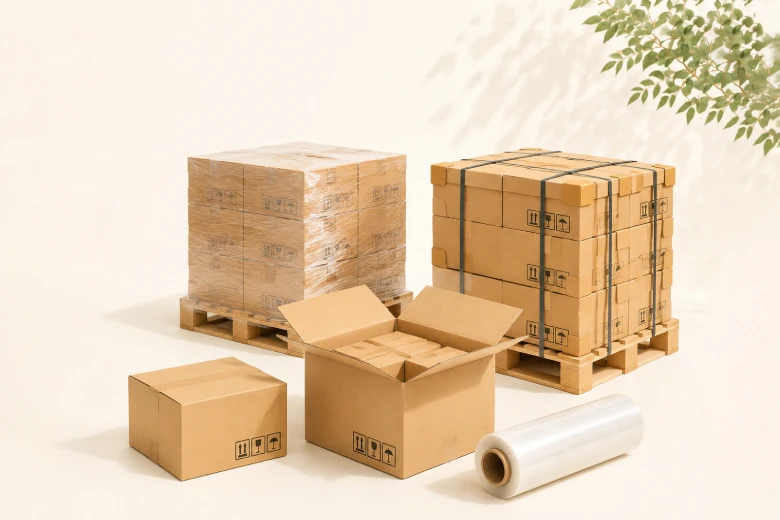
Manufacturers, warehouses, distributors, and logistics companies mainly use it, rather than the final customer. Tertiary packaging makes it easier to move products in bulk, organize inventory, reduce transportation damage, and improve loading efficiency.
In this guide, I will walk you through the key features, types, and why brands use tertiary packaging.
Key Features of Tertiary Packaging
Tertiary packaging is one of the types of packaging that helps with shipping and handling products. It comes with various key features, and some of them are as mentioned below:
- Bulk Product Handling: Tertiary packaging groups multiple secondary packages into one larger and more manageable unit.
- Transportation Protection: It protects products from impact, pressure, vibration, dust, moisture, and movement during long-distance shipping.
- Load Stability: Materials such as stretch wrap, straps, and corner protectors help keep boxes stable on pallets.
- Warehouse Efficiency: It allows products to be stacked, stored, counted, and moved easily within warehouses and distribution centers.
- Mechanical Handling: Tertiary packaging is designed to work with equipment such as forklifts, pallet jacks, cranes, and conveyor systems.
Types of Tertiary Packaging
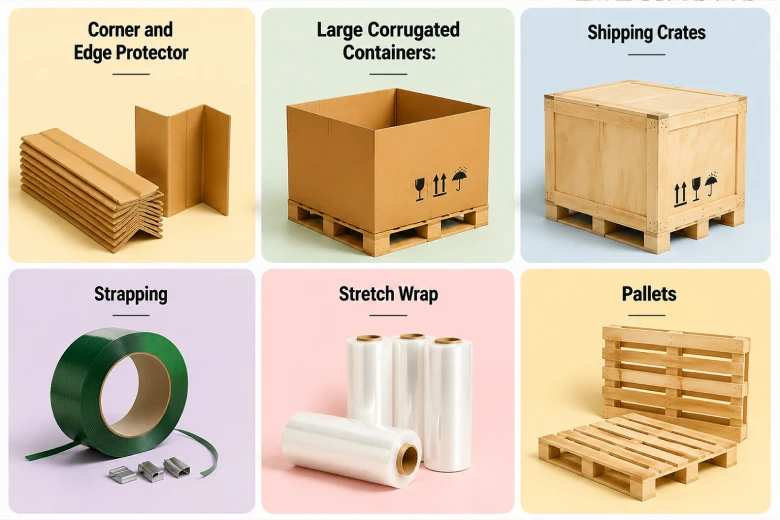
Tertiary packaging comes in different forms, and the right option depends on the product type, shipping method, storage conditions, and required level of protection. Below are some common types used across different industries.
- Pallets: Pallets are flat platforms used to support and transport large quantities of packaged products. Boxes, cartons, bags, or containers are stacked on top of them and secured for shipping. Pallets may be made from wood, plastic, metal, or corrugated cardboard. Wooden pallets are commonly used because they are strong, affordable, and suitable for heavy loads. Plastic pallets resist moisture and may be easier to clean, making them useful in the food, pharmaceutical, and healthcare industries.
- Stretch Wrap: Stretch wrap is a flexible plastic film wrapped around products stacked on a pallet. It keeps the load together and prevents boxes from shifting during storage and transportation. Stretch film can also protect packages from dust, moisture, and minor surface damage. People commonly apply it by hand or with automatic wrapping machines.
- Strapping: Strapping involves securing packages or pallet loads with strong bands. These bands may be made from plastic, polyester, steel, or other durable materials. Strapping is useful for heavy, unstable, or tightly packed loads. It keeps cartons together and reduces the risk of products falling or separating during handling.
- Shipping Crates: Shipping crates are strong containers often made from wood, plastic, or metal. They are used for large, heavy, fragile, or valuable products that require a high level of protection. Crates commonly transport machinery, industrial equipment, automotive parts, electronics, glass products, and medical devices. You may also add internal padding or supports to reduce movement.
- Large Corrugated Containers: Large corrugated containers are heavy-duty cardboard boxes designed to hold multiple smaller packages. They are often used for bulk storage, exports, industrial products, and large shipments. These containers are lighter than wooden crates and can be customized with inserts, dividers, reinforced walls, and printed handling instructions.
- Corner and Edge Protectors: Corner and edge protectors are placed around palletized loads to protect boxes from pressure caused by straps or wrapping. They also help maintain the load’s shape and improve stacking stability. They may be made from cardboard, plastic, foam, or metal, depending on the weight and sensitivity of the products.
Why Do Brands Use Tertiary Packaging?
Brands use tertiary packaging to protect bulk shipments and make supply chain operations more efficient. It supports transportation, warehousing, inventory control, and mechanical handling.
- Reduced Transportation Damage: Products may travel through several warehouses, trucks, ships, airports, and distribution centers before reaching retailers. Tertiary packaging keeps multiple packages together and protects them from impact, vibration, compression, and shifting.
- Efficient Loading and Unloading: Pallets and large shipping units allow workers to move many products at once. Instead of handling individual cartons, warehouse teams can use forklifts or pallet jacks to transport an entire load.
- Better Use of Storage Space: Properly designed tertiary packaging lets products stack safely in warehouses and shipping vehicles. Consistent dimensions help businesses use shelf, pallet, truck, and container space more effectively.
- Improved Supply Chain Speed: Grouping products into stable shipping units lets them move faster through warehouses and distribution centers. This reduces manual handling and can shorten loading, unloading, and order processing times.
- Lower Labor Costs: Moving products in bulk requires less manual effort than carrying individual boxes. Mechanical equipment can handle palletized loads, which may reduce labor requirements and improve workplace productivity.
- Inventory Management: Tertiary packages may include shipping labels, barcodes, pallet numbers, batch details, and tracking information. These details allow businesses to scan, identify, and monitor large shipments throughout the supply chain.
- Protection from Environmental Conditions: Stretch film, covers, crates, and sealed containers can help protect products from dust, moisture, sunlight, dirt, and changing weather conditions during transportation or storage.
How to Choose the Right Tertiary Packaging
Choosing the right tertiary packaging requires businesses to consider the product, total load weight, transportation method, storage environment, and handling equipment.
Start by evaluating the strength and stability of the secondary packages. Fragile cartons may require additional support, while strong corrugated boxes may only need a pallet and stretch wrap.
The shipment’s total weight also matters. Heavy products may need wooden or metal pallets, strong straps, and reinforced containers. Lighter products may suit cardboard pallets or standard stretch film.
Businesses should also consider whether the shipment will travel by road, air, rail, or sea. International and long-distance shipments may experience more handling, vibration, moisture, and pressure. These conditions may require stronger packaging.
The size of the tertiary package should fit warehouse shelves, trucks, shipping containers, and handling equipment. Poorly sized loads may waste space, increase shipping costs, and become unstable.
Sustainability should also be considered. Reusable pallets, recyclable cardboard containers, reduced plastic film, and properly sized shipping units can help lower packaging waste and environmental impact.
Secondary vs Tertiary Packaging
Secondary packaging groups or protects one or more primary packages. Examples include folding cartons, display boxes, corrugated cases, trays, and product bundles. Retailers and customers may see it.
Tertiary packaging groups several secondary packages for bulk transportation and warehouse handling. Examples include pallets, stretch-wrapped loads, large shipping containers, crates, and strapped cartons.
Secondary packaging focuses on product protection, branding, organization, and retail presentation. Tertiary packaging focuses on logistics, load stability, storage, mechanical handling, and large-scale transportation.
Both levels work together throughout the supply chain. Secondary packaging protects and organizes individual products or product groups, while tertiary packaging combines them into larger shipping units.
Conclusion
Tertiary packaging plays an important role in transporting, storing, and handling products in bulk. It protects secondary packages, improves load stability, supports warehouse operations, and allows businesses to move large quantities of goods efficiently.
Common forms of tertiary packaging include pallets, stretch wrap, straps, crates, large corrugated containers, and edge protectors. The best option depends on the product’s weight, fragility, destination, transportation method, and storage requirements.
By selecting the right materials and packaging structure, brands can reduce product damage, improve supply chain efficiency, lower handling costs, and ensure that goods arrive safely at their destination.