What is Tertiary Packaging?
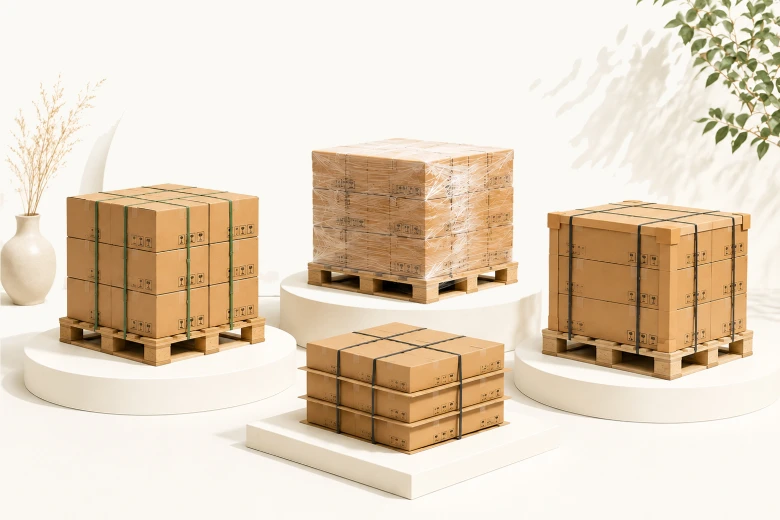
Tertiary packaging is the packaging layer used to combine several secondary packages into one large shipping or handling unit. It is mainly used by manufacturers, warehouses, distributors, logistics companies, and retailers rather than being seen by the final customer.
This packaging level protects products from impact, vibration, pressure, dust, moisture, and movement during transportation. It also allows workers to move large quantities of goods efficiently with forklifts, pallet jacks, cranes, and conveyor systems.
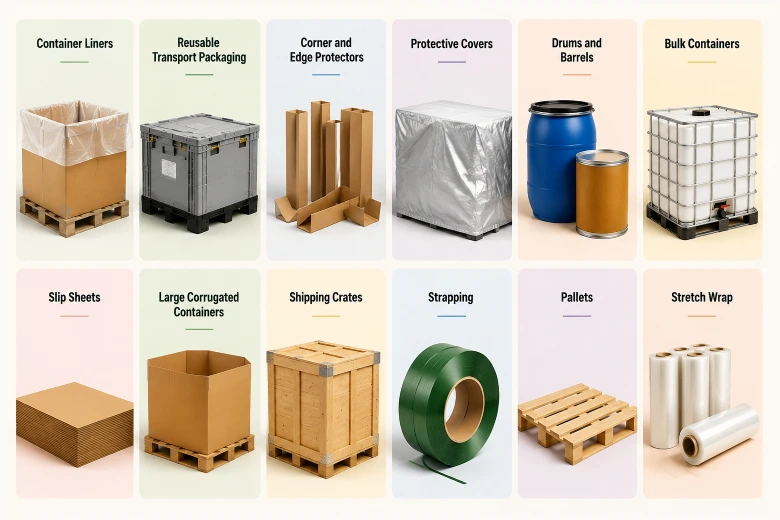
Common examples of tertiary packaging include pallets, stretch wrap, shipping crates, large corrugated containers, strapping, slip sheets, drums, and protective covers. The right packaging type depends on the product’s weight, dimensions, fragility, destination, transportation method, and storage environment.
For a full understanding of tertiary packaging, read our latest guide on tertiary packaging.
Now that you know what tertiary packaging is, let’s discuss the types of tertiary packaging:
Tertiary Packaging Types
Below are some of the most common types of tertiary packaging used across different industries.
Pallets
Pallets are flat platforms used to support, store, and transport large quantities of packaged products. Multiple boxes, cartons, bags, or containers are stacked on a pallet and secured with stretch wrap, straps, or protective covers.
Pallets are commonly made from wood, plastic, metal, or corrugated cardboard. Wooden pallets are widely used because they are strong, affordable, and suitable for many shipping applications. Plastic pallets resist moisture, chemicals, and bacteria, making them suitable for food, pharmaceutical, and healthcare products.
Metal pallets are often used for heavy industrial products, while corrugated pallets are lightweight and may be suitable for air freight or single-use shipments. Pallets make loading and unloading easier because they can be handled with forklifts and pallet jacks.
Stretch Wrap
Stretch wrap is a flexible plastic film wrapped tightly around products stacked on a pallet. It keeps boxes and packages together and prevents them from shifting, falling, or separating during transportation.
The film stretches as it is applied, creating tension that stabilizes the entire load. Stretch wrap can be applied manually or with automatic pallet-wrapping machines.
It also provides protection against dust, dirt, moisture, and minor surface damage. Clear stretch film allows workers to identify products easily, while colored or opaque films may be used for security, product identification, or protection from light.
Strapping
Strapping is used to secure boxes, cartons, crates, and palletized loads with strong bands. These bands are wrapped around the shipment and tightened to keep the packages together.
Common strapping materials include polypropylene, polyester, steel, and woven fabric. Polypropylene strapping is lightweight and often used for cartons and lighter loads. Polyester strapping is stronger and more flexible, making it suitable for heavy or shifting shipments.
Steel strapping is commonly used for machinery, construction materials, metal products, and other heavy industrial loads. Strapping improves load stability and reduces the risk of packages moving during handling and transportation.
Shipping Crates
Shipping crates are strong containers used to protect large, heavy, fragile, or valuable products. They are commonly made from wood, plywood, plastic, or metal.
Crates are often used for industrial machinery, automotive parts, medical equipment, electronics, glass products, artwork, and export shipments. Their rigid structure provides a high level of protection against impact, pressure, and rough handling.
Shipping crates can include internal supports, foam padding, blocking, bracing, or custom inserts. These features keep the product in a fixed position and reduce movement during transportation.
Large Corrugated Containers
Large corrugated containers are heavy-duty boxes designed to hold multiple smaller packages or large products. They are commonly used for bulk storage, warehouse handling, industrial goods, and domestic or international shipping.
These containers are made from strong corrugated cardboard and may include single-wall, double-wall, or triple-wall construction. The required strength depends on the weight and fragility of the contents.
Large corrugated boxes are lighter than wooden crates and can be folded when not in use. They can also be customized with dividers, reinforced panels, handles, ventilation holes, and printed handling instructions.
Slip Sheets
Slip sheets are thin, flat sheets placed underneath stacked products as an alternative to traditional pallets. They are commonly made from corrugated fiberboard, plastic, or laminated paperboard.
Products are stacked on the slip sheet and moved with specialized forklift attachments. Slip sheets take up less space and weigh less than wooden or plastic pallets.
Their lightweight design can help reduce shipping costs and improve storage efficiency. However, businesses may need special equipment to handle slip-sheet loads safely.
Bulk Containers
Bulk containers are large packaging units designed to store and transport substantial quantities of products. They may be rigid, collapsible, reusable, or disposable.
Common examples include bulk boxes, pallet boxes, intermediate bulk containers, and large plastic bins. These containers are widely used for agricultural products, automotive parts, food ingredients, chemicals, textiles, and industrial components.
Some bulk containers include lids, liners, drainage systems, or reinforced walls. Collapsible designs can be folded after use, helping businesses save space during return transportation and storage.
Drums and Barrels
Drums and barrels are cylindrical containers used for transporting liquids, powders, chemicals, oils, food ingredients, and industrial materials. They are commonly made from steel, plastic, fiberboard, or wood.
Steel drums are suitable for oils, chemicals, and hazardous materials because they provide strength and resistance to impact. Plastic drums resist corrosion and are often used for food, pharmaceutical, and chemical products.
Fiber drums are lightweight and commonly used for powders, dry ingredients, and solid materials. Proper closures and seals help prevent leakage, contamination, and product loss during transportation.
Protective Covers
Protective covers are placed around palletized loads, machinery, furniture, and other large shipments. They help protect products from dust, moisture, sunlight, dirt, and changing weather conditions.
Covers may be made from plastic film, tarpaulin, fabric, insulated materials, or waterproof materials. Some are disposable, while others are designed for repeated use.
Insulated pallet covers are useful for temperature-sensitive food, medicines, and healthcare products. Waterproof covers are often used for outdoor storage or products transported in open vehicles.
Corner and Edge Protectors
Corner and edge protectors are placed around the corners or sides of boxes, cartons, and palletized loads. They help prevent damage caused by straps, stretch wrap, pressure, and impact.
These protectors may be made from paperboard, corrugated cardboard, plastic, foam, or metal. They distribute pressure evenly and help packages maintain their shape.
Corner boards also improve stacking strength and keep pallet loads aligned. They are commonly used for appliances, furniture, glass products, doors, metal sheets, and boxed goods.
Reusable Transport Packaging
Reusable transport packaging is designed to be used repeatedly throughout a closed or managed supply chain. Examples include plastic crates, reusable pallets, metal racks, totes, bins, and collapsible containers.
This packaging is commonly used in automotive, retail, agriculture, food, manufacturing, and pharmaceutical industries. It can reduce packaging waste and provide consistent protection across multiple trips.
Reusable packaging often requires a return system so empty containers can be collected, cleaned, inspected, and used again. Although the initial cost may be higher, repeated use can reduce long-term packaging expenses.
Container Liners
Container liners are protective materials placed inside large boxes, drums, bulk containers, or shipping containers. They create a barrier between the product and the outer packaging.
Liners are commonly used for powders, grains, chemicals, food ingredients, and moisture-sensitive products. They may be made from plastic film, foil, woven fabric, or moisture-resistant materials.
These liners help prevent contamination, leakage, humidity damage, and direct contact with the container. Some liners are also designed to provide insulation or protection against static electricity.
Conclusion
Tertiary packaging is available in many forms, including pallets, stretch wrap, strapping, shipping crates, large corrugated containers, slip sheets, bulk containers, drums, protective covers, corner protectors, reusable transport packaging, and container liners. Each type provides different benefits related to product protection, load stability, warehouse handling, storage, and transportation.
The right choice depends on the shipment’s size, weight, fragility, destination, transportation method, handling equipment, and environmental conditions. By selecting suitable tertiary packaging, brands can reduce product damage, improve supply chain efficiency, lower handling costs, and ensure goods reach their destination safely.