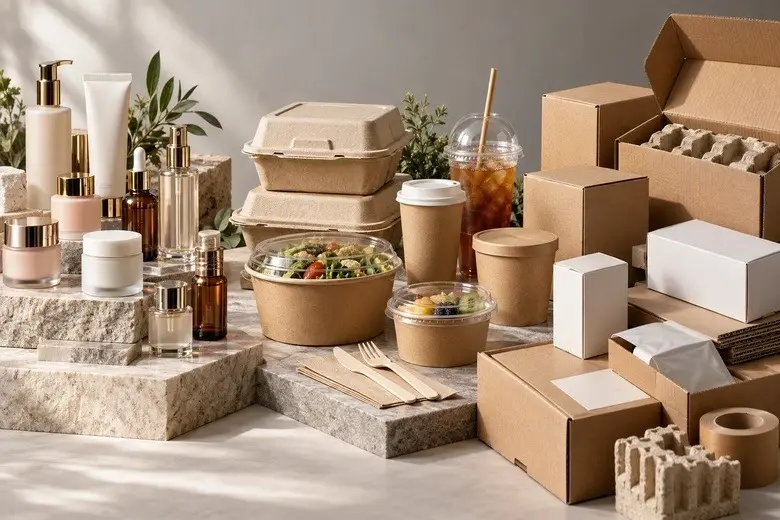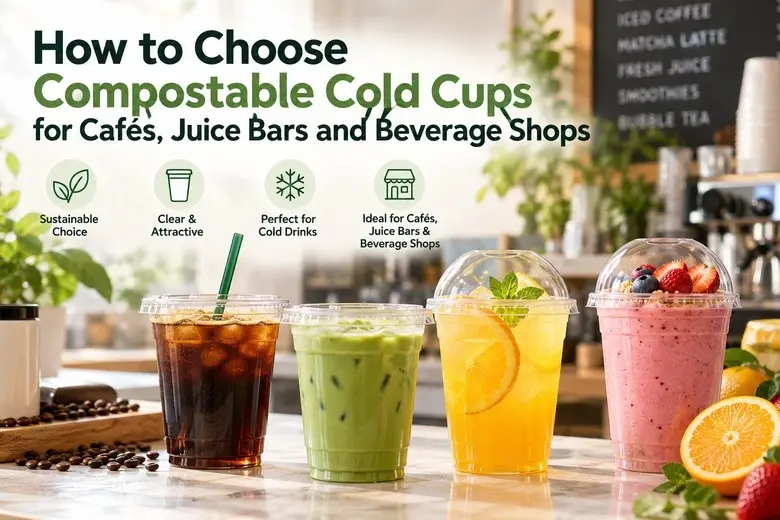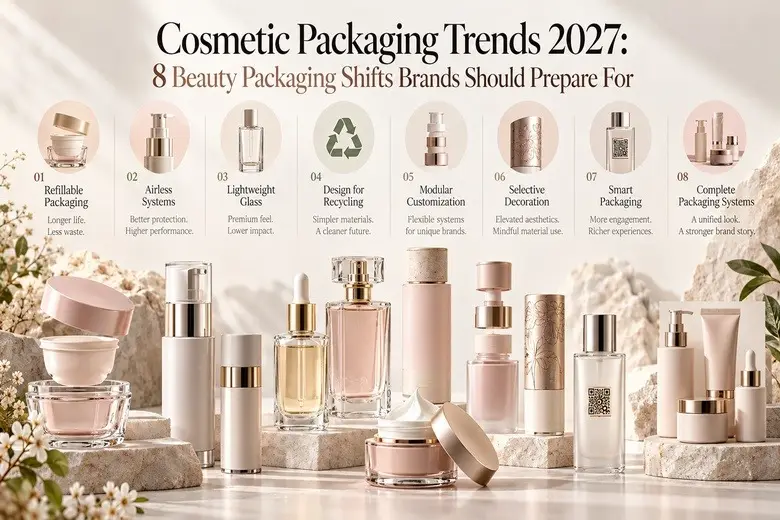
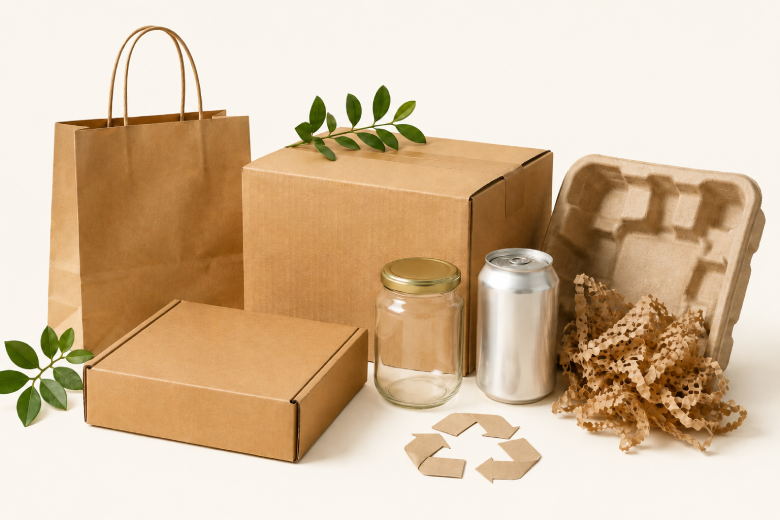
Sustainable packaging focuses on reducing this environmental impact without compromising product protection. It can involve using less material, choosing recyclable or renewable materials, increasing recycled content, improving packaging size, or designing packaging that can be reused.
However, sustainable packaging is not simply about replacing plastic with paper. The complete packaging lifecycle needs to be considered.
In this guide, I will explain what sustainable packaging is, what makes packaging sustainable, the materials commonly used, its benefits, challenges, and how businesses can make better packaging choices.
What Is Sustainable Packaging?
Sustainable packaging is packaging designed and manufactured to reduce its environmental impact throughout its life cycle while still protecting the product properly.
This includes how raw materials are sourced, how packaging is manufactured, how much material is used, how it is transported, and what happens to it after use.
A sustainable packaging solution may be recyclable, reusable, compostable, biodegradable, or made using recycled materials. However, sustainability is not limited to the material alone.
The size, weight, design, production process, transportation requirements, product protection, and end-of-life options also matter.
If you are new to the subject, understanding what packaging is and the role it plays throughout a product’s journey can make sustainable packaging easier to understand.
Most importantly, packaging still needs to perform its main purpose.
A package that uses very little material but fails during transportation may result in product damage. Another product may then need to be manufactured, packed, and shipped again.
Therefore, sustainable packaging needs to balance environmental responsibility with packaging performance.
What Makes Packaging Sustainable?
There is no single material or packaging style that automatically makes packaging sustainable.
Several factors need to work together.
Sustainable packaging usually focuses on:
- Reducing unnecessary packaging material
- Using recyclable or renewable materials
- Increasing recycled content
- Designing packaging for reuse
- Reducing packaging weight
- Improving transportation efficiency
- Making recycling easier for consumers
- Avoiding unnecessary mixed materials
- Reducing waste during manufacturing
- Using responsibly sourced raw materials
The goal is not to remove packaging completely. It is to use the amount required to protect the product properly.
For example, making a shipping box thinner may reduce cardboard usage. However, if that box becomes too weak and the product gets damaged, the environmental impact may actually increase.
This is why material reduction should always be supported by proper packaging testing.
Common Sustainable Packaging Materials
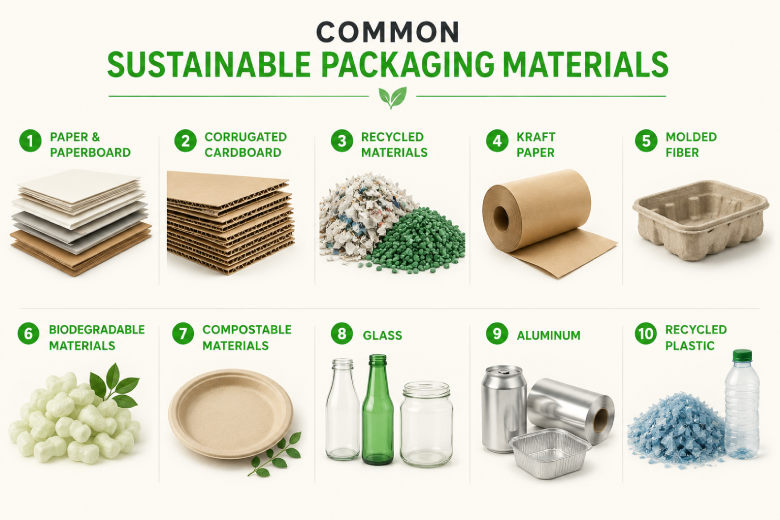
Choosing the right material is one of the most important parts of sustainable packaging design.
Different products require different levels of strength, cushioning, moisture resistance, barrier protection, and shelf life.
Here are some commonly used sustainable packaging materials.
1. Paper and Paperboard
Paper and paperboard are widely used for folding cartons, sleeves, labels, food packaging, retail boxes, and inserts.
They are lightweight, easy to print on, and widely recyclable where suitable recycling facilities are available.
Paperboard can also contain recycled fibers or fibers sourced from responsibly managed forests.
However, coatings, plastic laminations, adhesives, and other finishes can affect recyclability.
2. Corrugated Cardboard
Corrugated cardboard is commonly used for shipping boxes, mailer boxes, ecommerce packaging, and protective packaging.
Its fluted structure provides strength and cushioning while keeping the packaging relatively lightweight.
Corrugated cardboard can also contain recycled fibers and can usually be recycled after use.
It is commonly used for:
- Shipping boxes
- Mailer boxes
- Protective packaging
- Ecommerce deliveries
- Bulk transportation
3. Recycled Materials
Using recycled material can reduce the amount of virgin raw material required for packaging production.
Common examples include:
- Recycled paper
- Recycled cardboard
- Recycled plastic
- Recycled glass
- Recycled aluminum
Recycled materials can come from post-consumer or post-industrial sources.
Post-consumer recycled material comes from products that have already been used and collected for recycling.
Post-industrial recycled material generally comes from manufacturing waste that is recovered and reused.
Both approaches can help keep existing materials in circulation for longer.
4. Kraft Paper
Kraft paper is commonly used for paper bags, wrapping, cartons, void fill, and protective packaging.
Its strength allows manufacturers to create relatively simple packaging structures without relying on excessive decorative layers.
It can also contain recycled fibers depending on the grade being used.
5. Molded Fiber
Molded fiber is commonly made using recycled paper pulp.
It can be shaped around products to create trays, inserts, containers, cup holders, and protective packaging.
It is often used as an alternative to certain plastic or foam packaging components.
6. Biodegradable Materials
Biodegradable packaging materials are designed to break down through biological processes under suitable environmental conditions.
However, the term biodegradable should be used carefully.
Different materials need different levels of moisture, temperature, microorganisms, and time before they break down effectively.
This means biodegradable does not automatically mean the packaging will disappear quickly after disposal.
7. Compostable Materials
Compostable packaging is designed to break down into natural components under specific composting conditions.
Some materials are suitable for home composting, while others require industrial composting facilities.
Businesses should understand these differences before making compostability claims.
Availability of suitable composting facilities should also be considered before choosing this type of packaging.
8. Glass
Glass is commonly used for beverages, food products, cosmetics, and pharmaceutical packaging.
It can be reused and recycled repeatedly.
Glass also offers excellent barrier protection for certain products.
However, glass is heavier than many other packaging materials. This additional weight can increase transportation requirements.
Therefore, its complete lifecycle should be considered when evaluating sustainability.
9. Aluminum
Aluminum is commonly used for cans, containers, tubes, trays, and foil packaging.
It can be recycled multiple times and provides strong protection against moisture, oxygen, and light.
Its relatively lightweight structure also makes it useful for many packaging applications.
However, like every material, its complete production, transportation, recovery, and recycling process should be considered.
10. Recycled Plastic
Plastic is not automatically unsustainable.
Its lightweight structure, durability, moisture resistance, and barrier properties make it difficult to replace in certain packaging applications.
Plastic packaging can become more resource-efficient by:
- Reducing the amount of material used
- Increasing recycled content
- Designing mono-material structures
- Making recycling easier
- Removing unnecessary plastic components
- Designing packaging for reuse
You can explore these options in more detail in my complete packaging materials guide, where I explain the characteristics and common applications of different packaging materials.
Different Approaches to Sustainable Packaging
Sustainable packaging does not always mean replacing one material with another.
Businesses can improve packaging sustainability in several different ways.
Reduce Packaging Material
One of the simplest approaches is reducing unnecessary material.
This may involve:
- Making boxes smaller
- Removing unnecessary layers
- Reducing excess plastic
- Using thinner materials where practical
- Reducing oversized shipping cartons
- Minimizing unnecessary void fill
This approach is often called material reduction or lightweighting.
However, the packaging still needs enough strength to protect the product.
Improve Packaging Size
Using packaging that closely matches the product can reduce both material consumption and shipping volume.
Oversized packaging usually requires:
- More packaging material
- More void fill
- More storage space
- More pallet space
- More transportation space
Properly sized packaging can allow more products to fit inside warehouses, trucks, containers, and pallets.
This can improve overall logistics efficiency.
Design Packaging for Recycling
Recycling becomes more difficult when several different materials are permanently combined.
For example, packaging that combines paper, plastic film, foil, adhesives, coatings, and laminations may be difficult to separate.
Using fewer compatible materials can make packaging easier to recycle.
Businesses can also add clear disposal instructions to help customers understand what they should do with the packaging after use.
Use Recycled Content
Another approach is replacing some virgin material with recycled material.
This can reduce demand for newly extracted resources while keeping existing materials in circulation.
However, the amount of recycled content that can be used depends on the product, packaging strength, appearance, manufacturing requirements, safety standards, and regulations.
Create Reusable Packaging
Reusable packaging is designed to complete multiple use cycles instead of being discarded immediately.
Examples include:
- Refillable bottles
- Returnable shipping boxes
- Reusable containers
- Reusable glass jars
- Durable storage boxes
- Refillable cosmetic packaging
- Reusable pallets
Reuse can reduce packaging waste when the packaging remains in circulation for enough use cycles.
The packaging must therefore be durable enough to survive repeated handling.
Sustainable Packaging vs Eco-Friendly Packaging
Sustainable packaging and eco-friendly packaging are often used interchangeably, but they do not always mean exactly the same thing.
Eco-friendly is a broad term generally used for products or materials that have some environmental benefit.
Sustainable packaging looks at a much wider picture.
It can consider:
- Raw material sourcing
- Material quantity
- Manufacturing
- Energy use
- Product protection
- Transportation
- Reusability
- Recyclability
- Disposal
- Waste management infrastructure
For example, replacing a lightweight plastic package with a much heavier material does not automatically make the new packaging more sustainable.
Similarly, a package may technically be recyclable, but there may be no suitable recycling facility available where the customer lives.
Sustainability requires looking at the complete packaging system rather than focusing on one feature.
What Is the Sustainable Packaging Life Cycle?
The environmental impact of packaging begins before the package reaches the customer.
Its complete life cycle usually includes several stages.
Raw Material Sourcing
The first stage involves collecting or producing the raw materials required to manufacture packaging.
These materials may come from forests, recycled waste, minerals, petroleum-based resources, agricultural waste, or other sources.
Responsible sourcing can help reduce environmental impact from the beginning.
Manufacturing
Raw materials then need to be converted into packaging.
Manufacturing may require:
- Energy
- Water
- Printing inks
- Adhesives
- Coatings
- Machinery
- Finishing processes
Waste may also be generated during manufacturing.
Efficient production methods can help reduce unnecessary material and resource consumption.
Transportation
Packaging and packaging materials usually move between several locations.
These may include:
- Material suppliers
- Packaging manufacturers
- Product manufacturers
- Distribution centers
- Retail stores
- Warehouses
- Customers
Packaging weight and size can directly affect transportation efficiency.
Lighter and properly sized packaging can allow more products to be transported within the same space.
Consumer Use
Some packaging is discarded immediately after opening.
Other packaging can remain useful for storage, refilling, transportation, or another purpose.
Designing packaging for reuse can extend the amount of time the material remains in circulation.
End of Life
The final stage determines what happens when the packaging is no longer required.
Packaging may be:
- Reused
- Recycled
- Composted
- Incinerated
- Sent to landfill
Thinking about end-of-life options during the design process is an important part of sustainable packaging development.
Benefits of Sustainable Packaging
Sustainable packaging can provide environmental and practical benefits when designed properly.
Reduces Packaging Waste
Using fewer materials and removing unnecessary packaging layers can reduce the amount of packaging entering the waste stream.
Conserves Raw Materials
Using recycled and renewable materials can reduce dependence on newly extracted resources.
Improves Shipping Efficiency
Smaller and lighter packaging allows businesses to fit more products into cartons, pallets, warehouses, trucks, and shipping containers.
This can also reduce unnecessary transportation requirements.
Supports Circular Packaging Systems
Circular packaging aims to keep materials in use for longer rather than following a simple use-and-dispose model.
Reusable and recyclable packaging can help support this approach.
Makes Disposal Easier
Simple packaging structures and clear recycling instructions make it easier for customers to understand what to do with packaging after use.
Supports Sustainability Goals
Businesses can improve packaging as part of their wider efforts to reduce material consumption and waste across their supply chains.
Challenges of Sustainable Packaging
Sustainable packaging also comes with several challenges.
A material that works well for one product may not be suitable for another.
Product Protection
Packaging must protect the product first.
Food, pharmaceuticals, cosmetics, electronics, and fragile products may require:
- Moisture barriers
- Oxygen barriers
- Cushioning
- Temperature protection
- Tamper protection
- Light barriers
Removing important packaging features without testing can result in product damage or shorter shelf life.
Recycling Infrastructure
A package may technically be recyclable, but consumers still need access to facilities capable of processing it.
Recycling systems can also vary between cities and countries.
This means recyclability needs to be considered alongside the infrastructure available in the target market.
Material Compatibility
Combining different materials can improve packaging performance but make recycling more difficult.
Packaging designers need to consider:
- Coatings
- Adhesives
- Labels
- Laminations
- Windows
- Inks
- Closures
Simplifying these components where possible can make material recovery easier.
Cost
Some sustainable materials or packaging systems may cost more initially.
However, sustainability does not always mean paying more.
Reducing packaging size, weight, material usage, and shipping volume may also lower packaging or transportation costs.
Consumer Understanding
Customers need clear information about how packaging should be disposed of.
Terms such as recyclable, biodegradable, compostable, and reusable can become confusing when proper instructions are missing.
How Can Businesses Make Packaging More Sustainable?
Businesses do not always need to redesign their entire packaging system.
Small changes can make a meaningful difference, especially when packaging is produced in large volumes.
Start by reviewing your current packaging.
Ask:
- Is the package larger than necessary?
- Can any packaging layers be removed?
- Is there excessive empty space?
- Can recycled content be increased?
- Can difficult-to-recycle materials be replaced?
- Can fewer materials be used?
- Can packaging weight be reduced?
- Can the package be reused?
- Is recycling easy for customers?
- Does the packaging still protect the product properly?
Businesses can then consider:
- Reducing packaging size
- Removing unnecessary layers
- Increasing recycled content
- Using recyclable materials
- Reducing mixed-material structures
- Replacing excessive plastic where practical
- Designing packaging for reuse
- Reducing unnecessary coatings
- Adding clear recycling instructions
- Improving packaging-to-product dimensions
- Testing lighter material options
- Choosing responsibly sourced materials
Most importantly, test any packaging changes before production.
Reducing material should never result in packaging that cannot perform its main purpose.
Sustainable Packaging Trends
Sustainable packaging continues to develop as businesses, manufacturers, governments, and consumers look for better ways to reduce packaging waste.
Current developments include:
- Mono-material packaging
- Reusable packaging systems
- Increased recycled content
- Lightweight packaging
- Fiber-based alternatives
- Right-sized packaging
- Clearer recycling instructions
- Circular packaging systems
I have discussed these developments further in my guide to sustainable packaging trends, including the approaches shaping modern packaging design and manufacturing.
Is Sustainable Packaging Always Better?
Not necessarily.
A package should not be considered sustainable simply because it is made from paper, plants, recycled material, or another material commonly associated with sustainability.
The complete lifecycle needs to be considered.
For example, replacing lightweight plastic packaging with a much heavier material may increase transportation requirements.
Similarly, reducing packaging too aggressively may increase product damage.
Businesses should consider:
- Where the material comes from
- How much material is required
- How it is manufactured
- How much it weighs
- How well it protects the product
- Whether customers can recycle it
- Whether it can realistically be reused
- What happens after disposal
There is no single sustainable packaging solution that works for every product.
The right option depends on the product, supply chain, material requirements, recycling infrastructure, transportation, manufacturing process, and end-of-life system.
Examples of Sustainable Packaging
Some common examples of sustainable packaging include:
- Corrugated shipping boxes containing recycled fibers
- Folding cartons made with responsibly sourced paperboard
- Refillable glass containers
- Reusable ecommerce packaging
- Mono-material flexible packaging
- Molded fiber protective inserts
- Paper-based void fill
- Packaging made using post-consumer recycled material
- Right-sized shipping boxes
- Reusable shipping containers
- Compostable packaging designed for suitable waste systems
The right option depends on how the packaging will be manufactured, used, transported, recovered, and disposed of.
Final Takeaways
Sustainable packaging is not about choosing one particular material. It is about reducing environmental impact throughout the complete packaging lifecycle while still protecting the product properly.
Using less material, increasing recycled content, improving recyclability, designing for reuse, and choosing the right packaging size can all contribute to better packaging decisions.
Businesses should look at the complete packaging system rather than relying only on terms such as recyclable, biodegradable, compostable, or eco-friendly.
For more practical guides covering packaging materials, designs, manufacturing, and sustainability, explore Packaging Editorial.
Frequently Asked Questions
What is sustainable packaging in simple words?
Sustainable packaging is packaging designed to protect products while reducing waste, material consumption, and environmental impact. It may use recyclable, reusable, renewable, compostable, or recycled materials.
What materials are used for sustainable packaging?
Common materials include paper, paperboard, corrugated cardboard, recycled plastics, aluminum, glass, molded fiber, and certain biodegradable or compostable materials.
Is cardboard sustainable packaging?
Cardboard can be a sustainable packaging option because it is recyclable and can contain recycled fibers. However, sourcing, coatings, design, material usage, and local recycling systems also affect its sustainability.
Is plastic packaging sustainable?
Some plastic packaging can have sustainability benefits when it uses recycled content, requires less material, protects products effectively, and can realistically be recycled within the available recycling system.
What is the difference between recyclable and biodegradable packaging?
Recyclable packaging can be collected and processed into material that can be used again. Biodegradable packaging breaks down through biological processes under suitable environmental conditions.
Is biodegradable packaging the same as sustainable packaging?
No. Biodegradability only describes how a material can break down. Sustainable packaging considers material sourcing, production, transportation, product protection, reuse, recycling, and disposal.
Why is sustainable packaging important?
Sustainable packaging can reduce waste, conserve raw materials, improve shipping efficiency, support recycling systems, and reduce the environmental impact associated with packaging production and disposal.
How can I choose sustainable packaging for my product?
Start with the protection your product requires. Then compare material usage, weight, recycled content, recyclability, sourcing, transportation efficiency, reuse potential, and available disposal or recycling systems.